

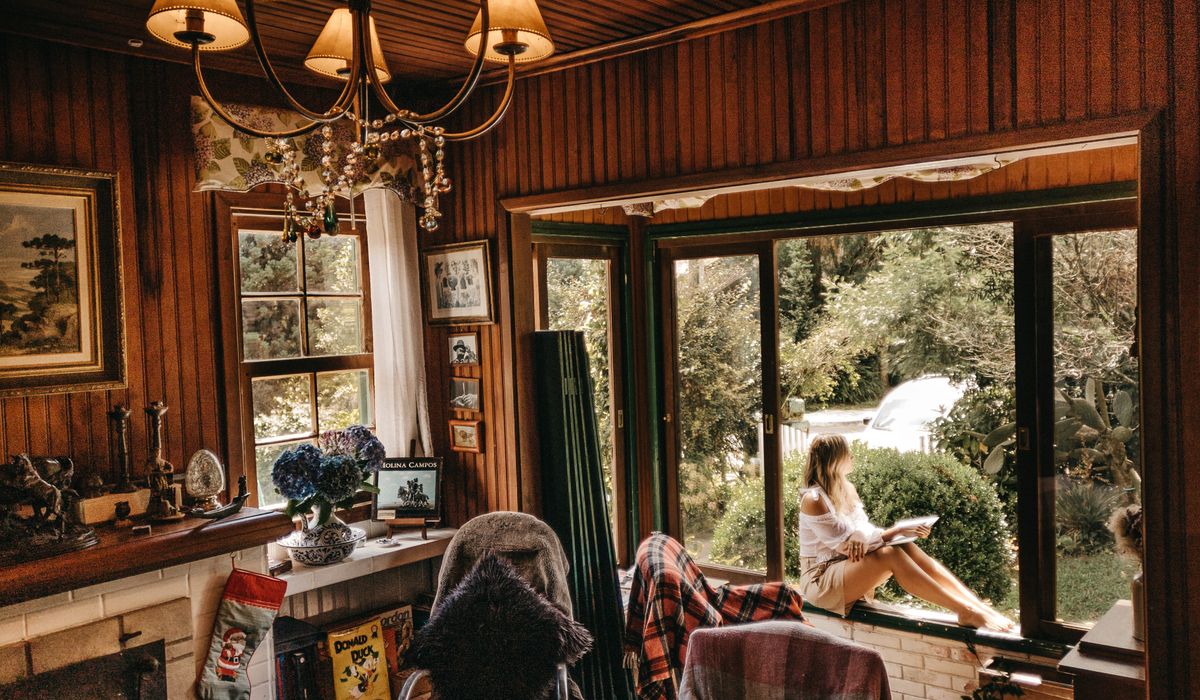
Why a Reading Corner Works So Well in a Small Flat
In a compact flat, every square metre has to earn its keep. That's why a reading corner is such a clever use of space: it takes an awkward spot — the gap beside a chimney breast, the dead zone between a sofa and a window — and gives it a purpose. Unlike a spare bedroom or a home office, a reading nook doesn't demand a whole room. It just needs a chair, a light, and a reason to linger.
There's also a psychological benefit. In a small home, the same few metres get used for everything: eating, working, watching television, scrolling on your phone. A dedicated corner gives your brain a cue that this is where you slow down. You don't need to add an extension or knock through a wall. You need about one and a half metres of wall, a comfortable seat, and a little thought about light and texture.
Start by Choosing the Right Spot
Before you buy anything, walk around your flat and look for corners that are already doing nothing useful. The best candidates usually share a few qualities:
- Away from the main traffic route — not the path between the kitchen and the bathroom door.
- Near natural light, but not directly in it — a spot beside a window is ideal; directly under a glaring south-facing window is not.
- Backed by at least two walls or a solid piece of furniture — we tend to feel more settled when we aren't exposed on all sides.
- Close to a power socket — you will want a lamp, and trailing extension leads across a small room quickly undo the calm.
If your flat is a studio or a one-bedroom with an open-plan living area, consider the corner furthest from the kitchen. Cooking smells and clattering pans are the enemy of a restful read. Even a small folding screen or a tall bookcase placed at a right angle can create a sense of separation without blocking light.
Pick an Armchair That Actually Fits
The armchair is the heart of the corner, and it's where most people go wrong. A generous wingback may look wonderful in a showroom, but in a two-metre alcove it will swallow the room. Measure your space first, then measure it again — and remember to allow at least 45 centimetres of walking space around the chair.
For small flats, look for:
- A high back and a modest seat depth — around 50 to 55 centimetres deep is comfortable without being enormous.
- Narrow or sloping arms — they take up less floor space than chunky rolled arms and make the chair easier to get out of.
- Legs rather than a skirted base — visible floor underneath makes a compact chair feel lighter and the room feel bigger.
- A fabric with a bit of texture — boucle, wool blends and brushed cotton hide everyday wear far better than smooth flat weave.
If floor space is genuinely tight, a compact recliner or a swivel chair can work hard in a small room — the swivel lets you turn towards the window for daylight or towards the room in the evening. A footstool that doubles as storage is another quiet winner; tuck a couple of paperbacks inside and it earns its footprint twice over.
Layer Your Lighting for Warmth
Overhead lighting is the quickest way to kill a cosy atmosphere. A single pendant blazing from the ceiling flattens everything and makes a corner feel clinical. Instead, think in layers.
The most important layer is a floor lamp with a warm bulb — somewhere between 2700K and 3000K. Place it slightly behind and to the side of your shoulder, so the light falls onto the page rather than into your eyes. An angled reading lamp with an adjustable head is worth the extra cost, because you can direct it precisely.
Add a second, softer source: a small table lamp on a side table, a clip-on light on a shelf, or even a plug-in wall light if you don't want to sacrifice floor space. The aim is a pool of light around the chair with the rest of the room falling into gentle shadow. A dimmer switch, or a smart bulb you can turn down from your phone, makes the corner adaptable from bright winter mornings to late evenings.
Layer Soft Furnishings for Comfort and Colour
Texture is what turns a corner from merely furnished into genuinely inviting. Start with a throw draped over the back or arm of the chair — a chunky knit or a soft brushed cotton in a warm neutral works with almost any scheme. Then add a cushion or two. A small lumbar cushion supports your lower back during a long read; a larger square one adds visual weight and colour.
Underfoot, a small rug defines the zone. In a rented flat with hard flooring, a rug of around 120 by 170 centimetres is usually enough to sit under the front legs of the chair and give your feet somewhere warm to land. Look for a low-pile or flatweave rug if the space is tight, as thick piles can make a small corner feel cramped. A washable rug is a sensible choice if you have pets or like a cup of tea while you read.
If you have a radiator nearby, resist the temptation to drape wet washing over it — it steals the warmth you're paying for and makes the corner feel like a utility area rather than a retreat.
Add Storage Without Clutter
A reading corner needs a place to rest a cup, a pair of glasses and the book you're halfway through. A slim side table, a narrow console, or even a wall-mounted shelf at elbow height will do the job without eating floor space. Keep the surface deliberately sparse: one lamp, one mug, one book. Anything more and the corner starts to feel like a dumping ground.
For books themselves, a tall narrow bookcase in the corner, or a couple of floating shelves above the chair, keeps your reading material close at hand. If you're short on wall space, a fabric book sling hung on the side of the chair or a basket tucked beside it works just as well. Rotate your books seasonally so the shelves stay interesting rather than overflowing.
Finally, give the corner a small finishing touch that makes it yours — a framed print, a plant that tolerates low light, a favourite ornament. It's often the detail you notice last that makes a space feel finished. With a comfortable chair, warm focused light and a few soft layers, that unused corner becomes the most-used seat in the flat.




John Doe
14 January, 2022Having no content in post should have adverse..
Chauffina Carr
10 April, 2022We use these tests all time! Killer stuff!
Jim Séchen
16 July, 2022Thanks for all the comments, everyone!